

Smart air conditioners are transforming home comfort in 2025. With advancements in AI, energy efficiency, and connectivity, these units offer more than just cooling—they enhance convenience, health, and sustainability. Here’s what’s trending this year.
1. AI-Powered Climate Control
Artificial intelligence is at the heart of modern smart ACs. AI algorithms learn your habits and adjust settings accordingly. For instance, Hisense’s U8 S Pro features presence-aware HI-SENSOR technology that auto-adjusts airflow, temperature, and humidity based on room occupancy and movement Tom’s Guide. This leads to personalized comfort and energy savings.
2. Seamless Smart Home Integration
Smart air conditioners now integrate smoothly with home ecosystems. Xiaomi’s Mijia Air Conditioner Pro Eco connects with the Xiaomi Home app and supports voice assistants like Google Assistant and Alexa LOS40. Similarly, Hisense’s U8 S Pro is part of the ConnectLife AI platform, enabling cohesive smart home integration and intelligent energy management Tom’s Guide.
3. Advanced Air Purification Features
Beyond cooling, air quality is a priority. Hisense’s U8 S Pro includes HI-NANO ion technology for air purification, ensuring cleaner indoor air Tom’s Guide. This is especially beneficial in urban areas where air quality can be a concern.
4. Enhanced Energy Efficiency
Energy efficiency remains a top focus. Samsung’s Bespoke AI Air Conditioners, part of their “Go Save Today” campaign, offer energy savings through AI optimization and extended warranty benefits The Times of India. These units adjust cooling based on room conditions, reducing energy consumption.
5. Voice Control and App Connectivity
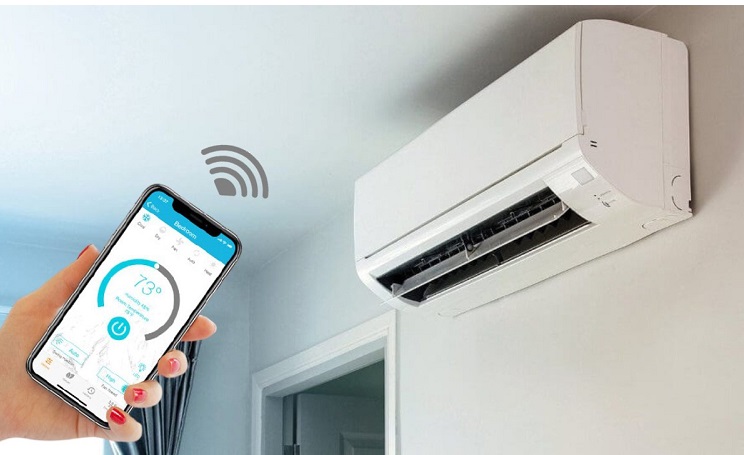
Voice control and app connectivity are standard features. Many smart ACs are compatible with voice assistants like Alexa and Google Assistant, allowing for hands-free operation. App connectivity enables remote control, scheduling, and monitoring, providing convenience and flexibility.
6. Quiet and Efficient Operation
Noise reduction is a key consideration. Units like the Hisense U8 S Pro are designed to operate quietly, enhancing comfort without disruptive noise Tom’s Guide. This is particularly important for bedrooms and study areas.
7. Predictive Maintenance and IoT Monitoring
Predictive maintenance is becoming common. Smart ACs can detect issues before they become major problems, alerting users to maintenance needs. This proactive approach extends the lifespan of the unit and ensures optimal performance.
Conclusion
Smart air conditioners in 2025 offer more than just cooling—they provide intelligent climate control, improved air quality, and energy efficiency. With features like AI integration, smart home compatibility, and advanced purification, they are a valuable addition to any modern home.